How the Borough Worked
The 1967 centennial edition documented more than buildings and industries. It recorded the borough officials, volunteer organizations, public facilities and community responses that kept Mount Union functioning through growth, fire and flood.
1867Government Begins
The borough’s charter was filed June 6, 1867. George McLaughlin became the first burgess, and the first council began the practical work of streets, taxes and borough administration. The centennial edition reproduced the charter and assembled early burgess and mayor lists.
The Daily News, June 6, 1967, viewer pp. 37, 39 and 43
1967A Working Borough
Features on Mayor Melvin Diven, council, borough equipment, sewage treatment and public planning captured the local government at the centennial. They are a time-specific account of 1967 rather than a description of current borough operations.
The Daily News, viewer pp. 16–18
Municipal ParkRecreation From a Former Industrial Site
The edition contrasted before-and-after photographs of the Municipal Park and showed the recreation area in summer and as an ice-skating destination in winter. The park story belongs to the borough’s larger transition from industry-centered land use to year-round public recreation.
The Daily News, viewer pp. 20–21
HousingChestnut Terrace and the Housing Authority
A feature on the Mount Union Housing Authority described efforts to provide improved housing and identified Chestnut Terrace as an early local housing project. The edition also placed the project beside photographs of community recreation, emphasizing a broader program of neighborhood improvement.
The Daily News, viewer p. 21
March 1936
The Flood That Isolated Mount Union
The centennial edition called the St. Patrick’s Day flood the borough’s worst disaster. It reported the loss of lights, telephones, railroad service and primary roads as Juniata River water entered the community. The Long Lumber Company was inundated, the country-club property was devastated and the Harbison-Walker dinky bridge across the river was swept away. Schools, churches and other buildings became part of the relief effort.
This history now has its own documented feature connecting the newspaper retrospective with government river records, surviving photographs, industrial consequences, relief work and later flood protection. Explore the Flood of 1936 →
Founded July 28, 1908
Mount Union Fire Company
1908
Civic-minded residents met in the old grade-school building to organize a dependable system of fire protection for the fast-growing industrial borough.
1910s–1920s
The company progressed from hose carts and chemical equipment to motorized apparatus. A 1919 Reo appears in the centennial edition’s photograph of the 1920 company.
1936
Firefighters took on extensive rescue and community-service responsibilities during the St. Patrick’s Day flood.
March 17, 1941
The Crum Building fire drew assistance from surrounding communities and was remembered as the largest fire in Mount Union history to that date.
World War II–1967
The company expanded ambulance, rescue, disaster and diving capabilities while continuing to modernize its apparatus. In 1967 it was raising funds for a new fire hall.
2002
The company purchased the former Huntingdon County Airport property for $300,000, beginning its second life as a site for fire-company benefits and community events. Explore the airport and airfield history →
The fire-company chronology comes from the organization’s own history as printed in the centennial edition. Equipment spellings and exact specifications should be checked against company records before being used outside this overview.
Viewer pp. 64–65.
Clubs and Service
Organizations That Built Community Life
The edition also recorded the VFW, American Legion, Masons, Elks, women’s clubs, political clubs, fire-company auxiliaries, business organizations and a civic-improvement committee. These listings are preserved as a snapshot of organized community life in 1967; they do not imply that every group remains active today.
The Daily News, viewer pp. 30 and 73
1953–1976
New Homes and Changing Land Use
Donaldson’s housing chapter adds project dates and building details to the centennial account of community redevelopment.
Chestnut Terrace
A newspaper excerpt reproduced in the book dates the creation of the Huntingdon County Housing Authority to March 1951 and the opening of Chestnut Terrace to 1953. The development provided 100 homes on 12.58 acres along Route 522, annexed to the borough before construction.
Bryan D. Donaldson, Brick Town USA, vol. 1 (2006), printed p. 253 (PDF p. 261). About this source.
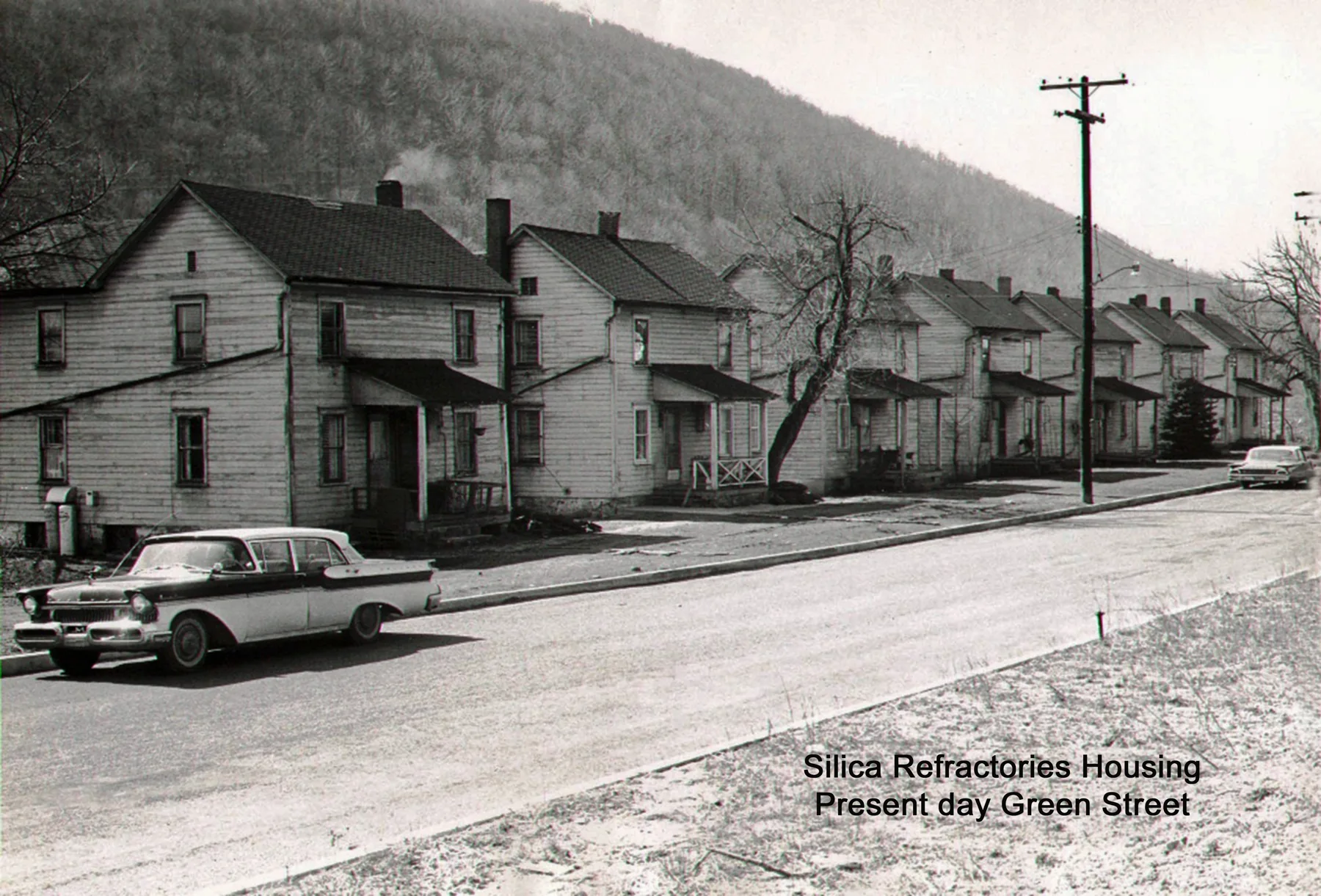
Green Street Village
Donaldson traces the land to the borough’s 1959 purchase of 17.50 acres from General Refractories for $16,070. Part of the property became senior housing: 13 two-family buildings and a community recreation building. The page labels the project 1963–1964 and also uses the spelling “Greene Street Village.”
Bryan D. Donaldson, Brick Town USA, vol. 1 (2006), printed p. 258 (PDF p. 266). About this source.
Taylor Apartments
The book dates completion of the seven-floor apartment building at Division and Milford streets to 1976. Donaldson remembers the earlier “Ewing’s Lot” as a place for baseball games and fire-company carnivals, connecting the building site to an older neighborhood gathering place.
Bryan D. Donaldson, Brick Town USA, vol. 1 (2006), printed p. 264 (PDF p. 272). About this source.
Neighbors Helping Neighbors
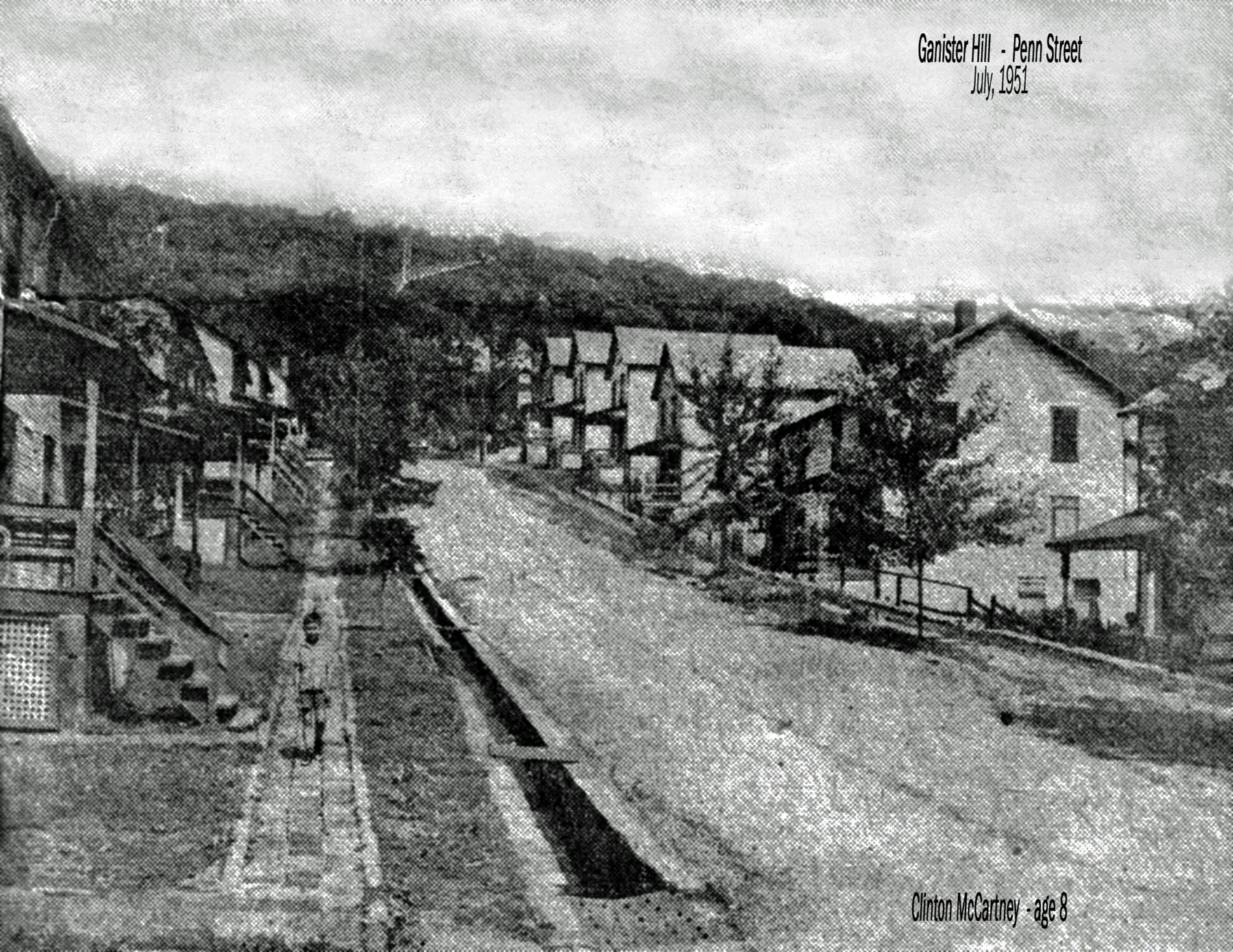
The Ganister Hill Sewing Club
An unsigned club history preserved by Donaldson traces its beginnings to 1930. Members met every other Tuesday, combined sewing with social visits, helped families through illness and bereavement, and sent packages to servicemen during World War II and Vietnam.
When Ganister Hill’s houses were removed and families moved away, the club continued. Its account lists fourteen members and officers for 1969, preserving evidence that neighborhood ties outlasted the neighborhood itself.
Bryan D. Donaldson, Brick Town USA, vol. 1 (2006), printed pp. 154–156 (PDF pp. 164–166). About this source.
This is the club’s own retrospective, reproduced with its author unidentified. Its opening “thirty years ago” does not agree with its later 1968–1969 references, so it is not assigned an exact composition date.
Explore the neighborhood stories still to collect.
The Mount Union Community Library identifies 1913 as its founding year. It marks a separate milestone on December 13, 2011, when it became entirely volunteer-run. Keeping those dates distinct recognizes both the library’s long history and the later commitment of volunteers to sustaining it.
The institution belongs alongside the borough’s fire company, clubs and service organizations in the story of residents maintaining shared community resources.
Source: Mount Union Community Library, About Us.
Sources
- The Daily News, June 6, 1967, viewer pp. 16–22, 30–31, 37, 39, 43, 58, 61–65 and 73.