Before Bricktown: Mills, Tanneries and Early Trades
Explore the water-powered and steam mills, the Juniata tannery and the work that preceded the brick plants. Read the early-industry feature.
Work, Trade and Everyday Life
Mount Union’s 1967 centennial edition preserved the names of factories, shops, contractors, banks and professional services that residents knew. This historical directory is intentionally separate from the current business directory.
Reading advertisements carefully
An advertisement confirms that a business promoted itself in the 1967 issue. Claims such as years in business, production totals or market leadership are identified below as advertiser statements unless a news feature independently supports them.
Factories and Producers
Harbison-Walker Refractories
The Mount Union works began in 1899 as the W. H. Haws Fire Brick Company. The centennial feature described it as the first United States plant built exclusively for silica refractories; Harbison-Walker acquired the operation and added No. 2 Works in 1904.
North American Refractories
The plant was built in 1911–12 by Mount Union Refractories and produced its first brick in 1912. The article traced wartime expansion and later corporate changes. A separate company advertisement’s production claims remain labeled as advertising.
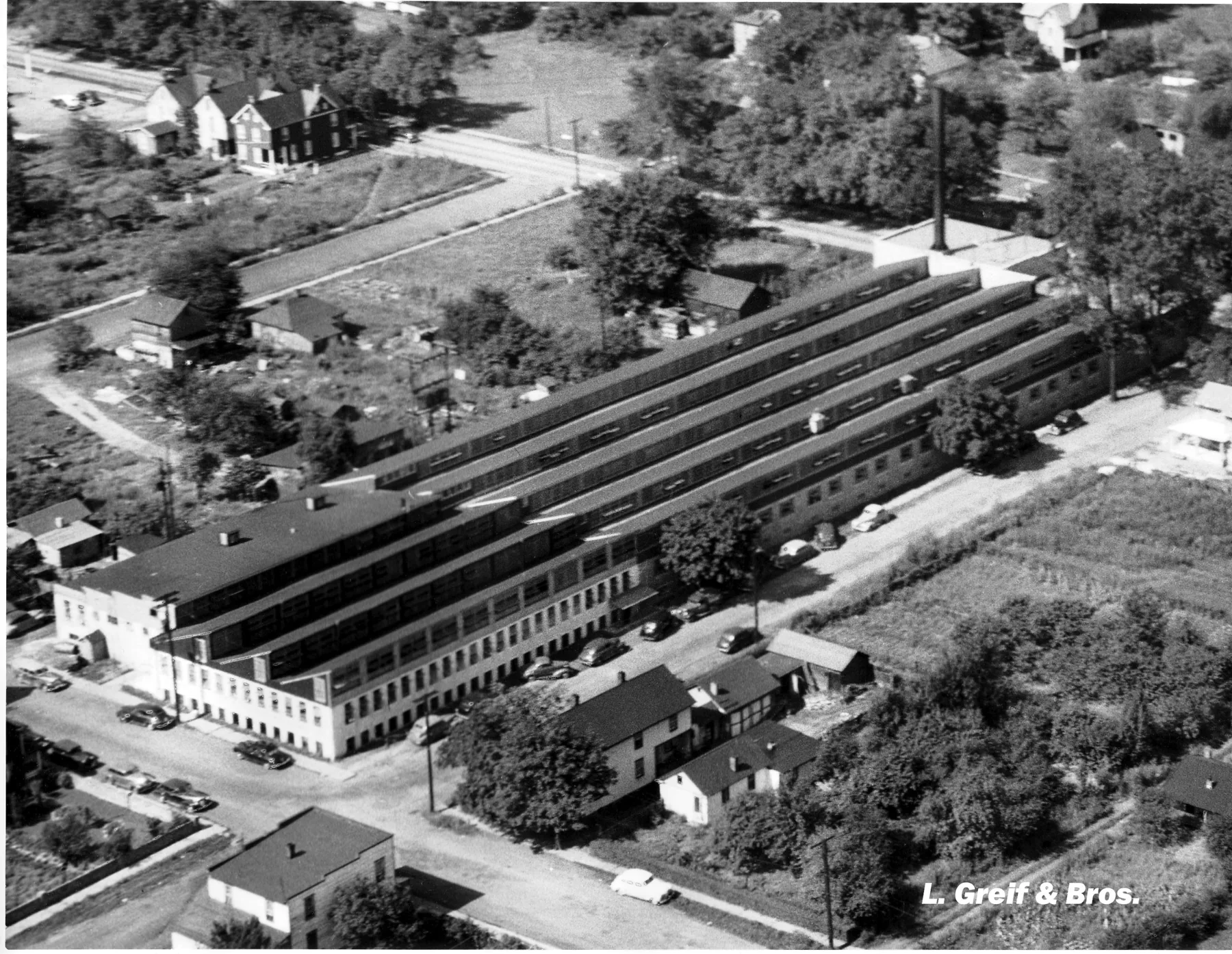
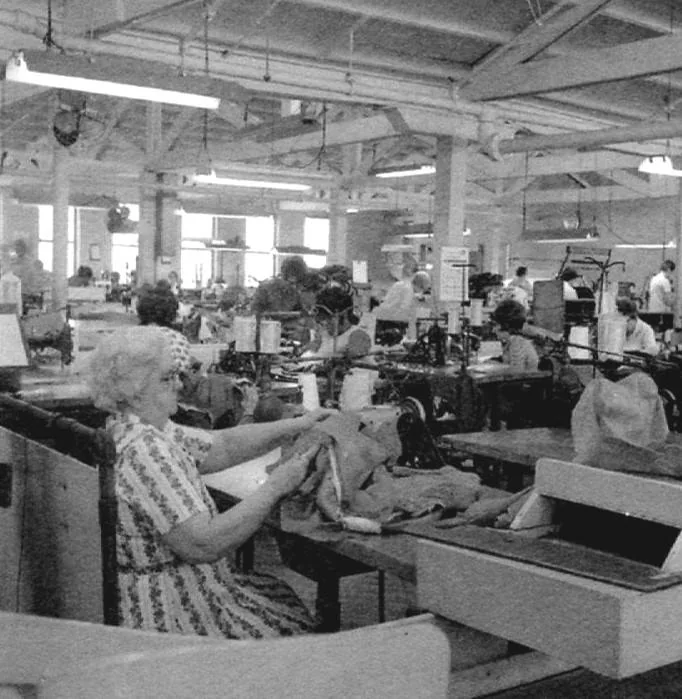
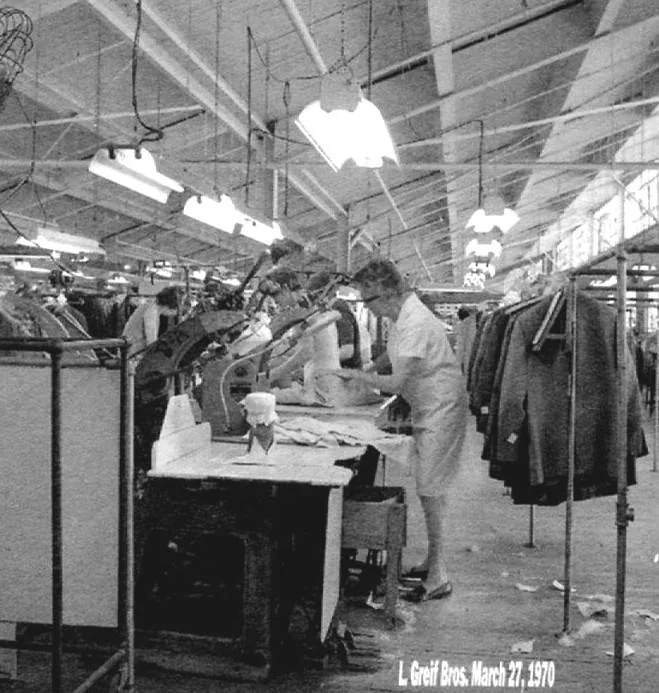
Mount Union Manufacturing / L. Greif & Brothers
The garment factory’s history includes sewing and pressing work, generations of local employees, and a transition to a newer plant. A dedicated feature brings together photographs, worker histories, federal employment records and the differing accounts of its opening and closure.
Industrial Hardwoods
Construction began in summer 1966 at Allenport, and production started in 1967. The plant made hardwood wheelbarrow handles.
DeFrehn and Moudy Chair Works
Established in a converted tannery in 1889, the factory rebuilt after a destructive 1892 fire and later operated under the W. H. Moudy Manufacturing Company. Its documented history includes national chair shipments, more than forty early employees, an advanced fire-protection system, “Moudy’s Row,” and a 1909 sheriff’s sale.
Robin Footwear
Explore the full Robin Footwear history and newspaper photographs →
An October 4, 1958 newspaper report reproduced by Donaldson counted 95 trainees preparing for work at the new shoe factory. Training covered cutting, stitching, cleaning and packing; the report did not give a firm production-opening date.
The book places the factory on North Division Street beside the Pennsylvania Railroad underpass, dates interior photographs to April 1962, and records a 12,000-square-foot addition on April 1, 1962. Donaldson gives 1981 as the closure year.
Bryan D. Donaldson, Brick Town USA, vol. 1 (2006), printed pp. 92–93 (PDF pp. 102–103). About this source.
Penglas
The centennial edition documented Penglas among the community’s mid-century industries. Its detailed company history remains a subject for further research.
Powder, Lumber and Railroad-Tie Operations
The edition revisited the Aetna powder plant, early sawmills, the Long Lumber Company, Lucy Furnace and railroad-tie treatment. These operations are developed further in Danger at the Aetna Powder Plant and the site’s industrial history.
E. DeVecchis & Sons
Concrete Block Across Central Pennsylvania
A 1967 news feature said Ettore DeVecchis formulated the establishment in 1924, beginning behind 208 West Poplar Street; moving in 1926 to leased Pennsylvania Railroad land opposite that address; forming a partnership with sons Wilson, Philip and Samuel in 1941; and opening the Small and Washington streets building in 1947. It also described later Burnham, McKee and State College operations and reported a capacity of 24,000 standard blocks per day.
Stores and Services Remembered
Water Street businesses remembered in 1933
In a reminiscence published by The Daily News, Lola Eberman Fields recalled the commercial district of her childhood extending between the Pennsylvania Railroad station and the post office in the Appleby building on West Water Street. Her account is valuable attributed memory; the sequence below should not be read as a modern address directory.
Rummel’s Mill and Dr. Porter’s Drug Store
Fields remembered John Rummel’s flour-and-feed mill near the canal bridge and Dr. Porter’s drug store in a three-story frame building opposite the post office.
Blacksmithing on Water Street
A large blacksmith shop stood on property later associated with the Flasher and Bell families. Fields remembered the working forge as a memorable part of the street’s daily life.
Beers Hotel / Alesi Hotel
The landmark at Shirley and Jefferson streets housed travelers, shops, a bank and community gatherings. Follow the Beers and Alesi families, the fires of 1913 and 1929, and the building’s final chapter in 1989.
American House and Neighboring Trades
The American House hotel stood near Sam Hines’s shoemaker shop, William Bice’s livery stable and Mrs. Price’s millinery shop—a compact cluster of lodging, transportation and retail service.
Eberman Store and Appleby Building
Fields placed her family’s store near the home of railroad employee Rudolph Sechler. Across the way, a vacant lot later held the three-story Appleby building and the public town pump.
Early Bank and Santa Fe Hotel
Her account placed an early Central National Bank location near Water and Division streets and remembered the Santa Fe Hotel as the route approached Railroad Street.
Reeder Hardware
A full historical advertisement documented a long-running hardware presence and is evidence of how the business presented its own history in 1967.
Hancock’s Store
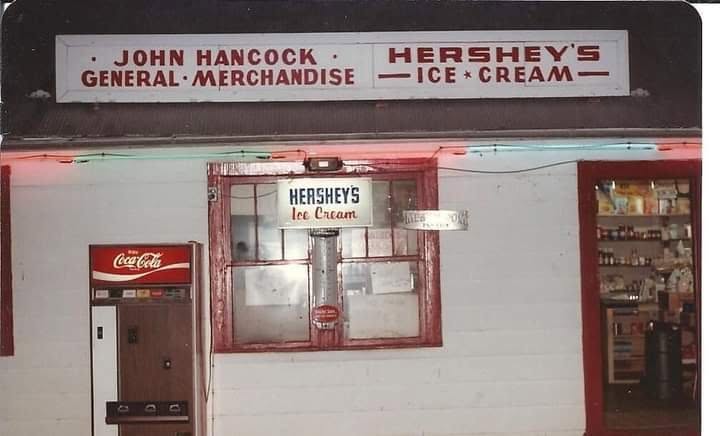
John and Zelda “Deed” Hancock operated this Hill Valley country store, service station and neighborhood gathering place from 1935 to 2002.
Saxe’s
Prominent advertisements and community recollections preserve this familiar retail name. Mike E. Dimoff Sr.’s documented retail career began with Dave Saxe by 1948 and later included service as vice president and general manager of Saxe’s Corporation. Read Dimoff’s documented profile.
Shapiro Brothers Clothing
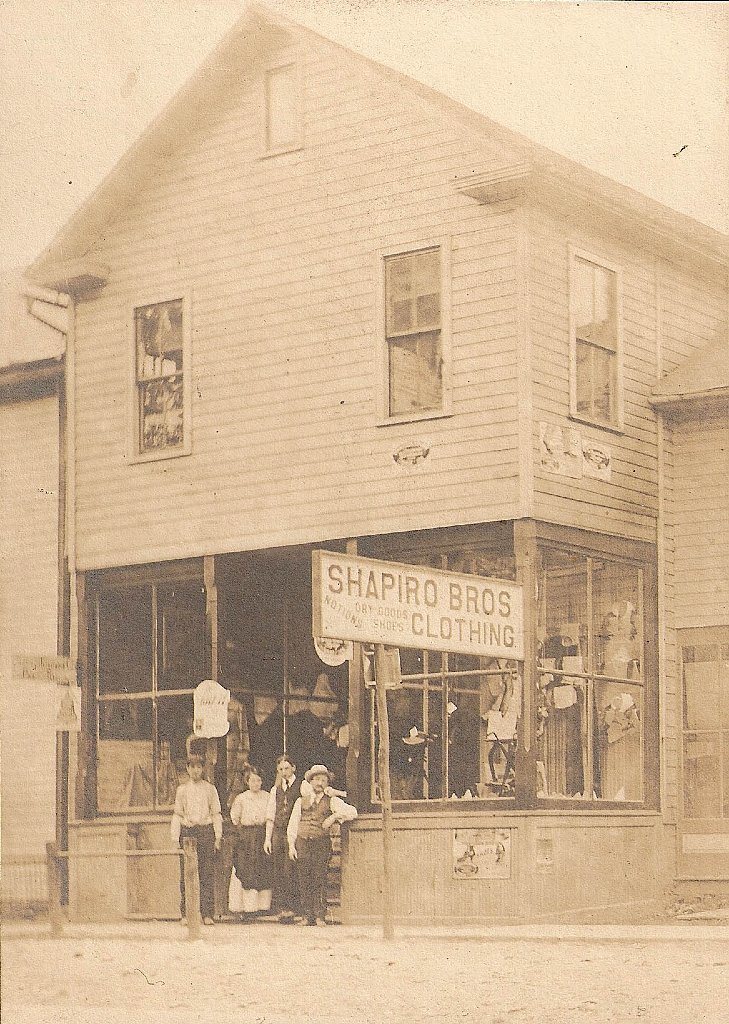
The storefront photograph directly documents Shapiro Bros. as a clothing store advertising men’s and boys’ clothing, boots and shoes. The people and date have not yet been identified.
Peduzzi’s Soda and Lunch
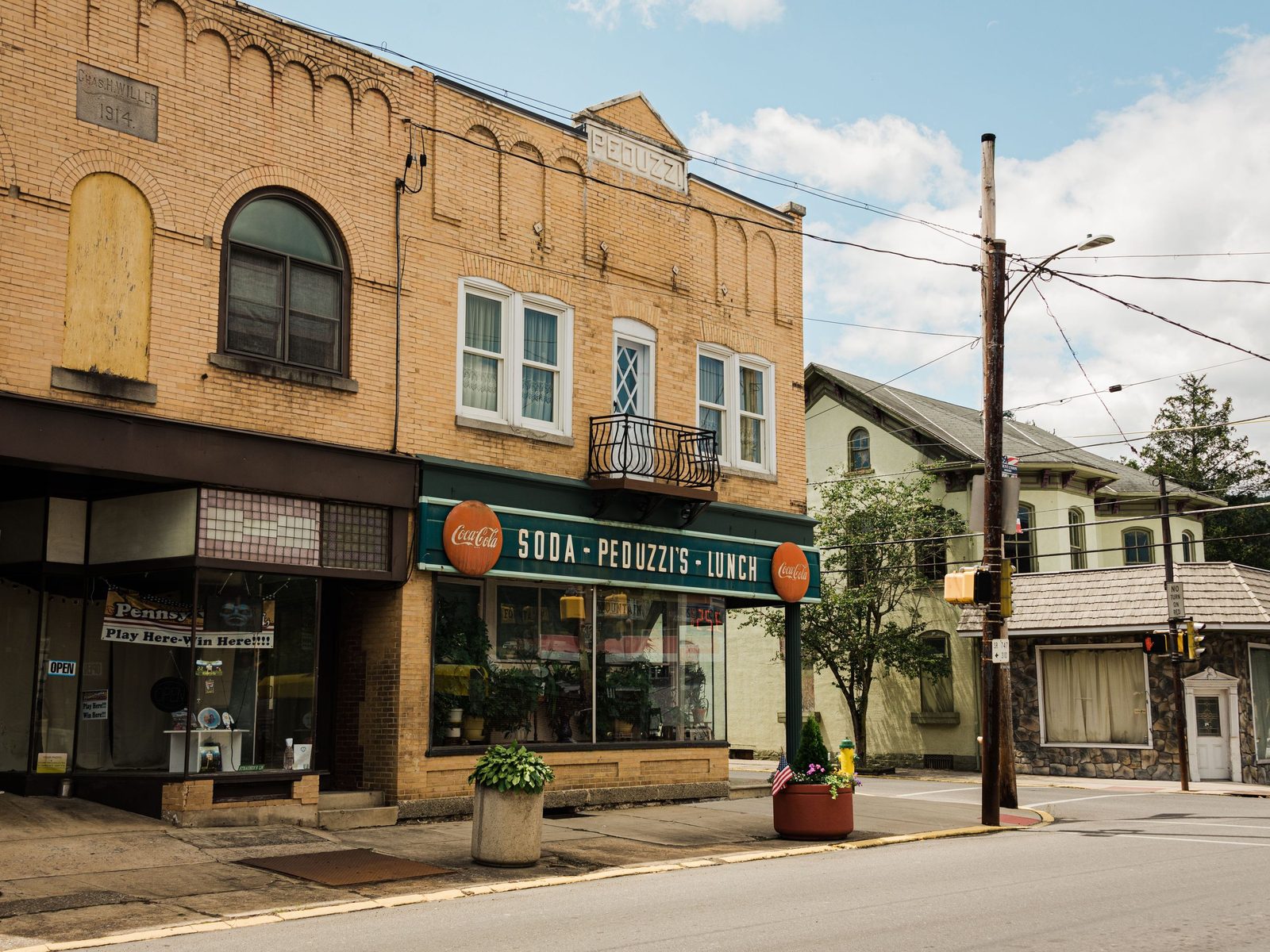
The Peduzzi family’s confectionery, soda fountain and lunch counter became a downtown landmark. Its story connects Italian stonemason T.C. Peduzzi with longtime proprietor, athlete and civic leader Carl “Spug” Peduzzi.
Appleby’s and Goodman’s
These businesses appear across the edition’s advertisements and attributed community memories, connecting commerce with families now represented on the Notable People page.
Banks and the Post Office
Bank advertisements and a feature on the post office document the financial and communication services supporting the borough.
Automobile-Era Businesses
Dealers, garages, service stations and parts businesses fill the special section, showing how the commercial landscape had shifted by the borough’s centennial.
The Fruit Market
A historical Fruit Market advertisement appears in the centennial church section. The later Allenport Fruit Market story belongs to a different period and is documented separately on Town Lore.
A Shopping Trip in the 1950s
Donaldson’s storefront captions locate the shops, services and upstairs offices that made downtown a place for everyday errands.
Murphy’s Moves; Saxe’s Expands
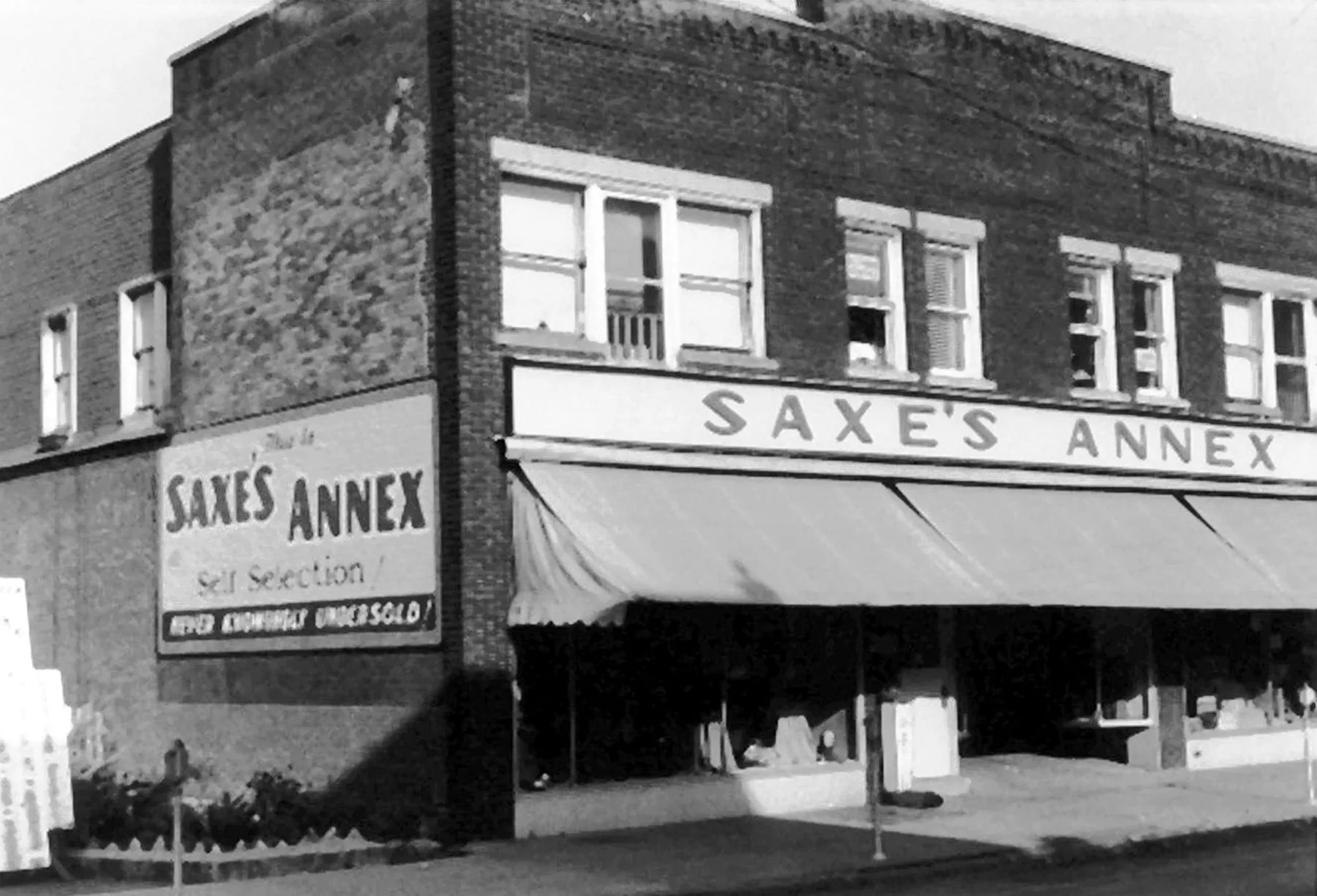
Donaldson dates G.C. Murphy’s move across Shirley Street to October 29, 1953, and its closing to June 7, 1984. Saxe’s Annex took over the vacated premises, adding a second store to the original Jefferson Street business. The book dates Dave Saxe’s department store to 1915.
Bryan D. Donaldson, Brick Town USA, vol. 1 (2006), printed pp. 33–34 (PDF pp. 41–42). About this source.
Groceries, Shoes and a Haircut
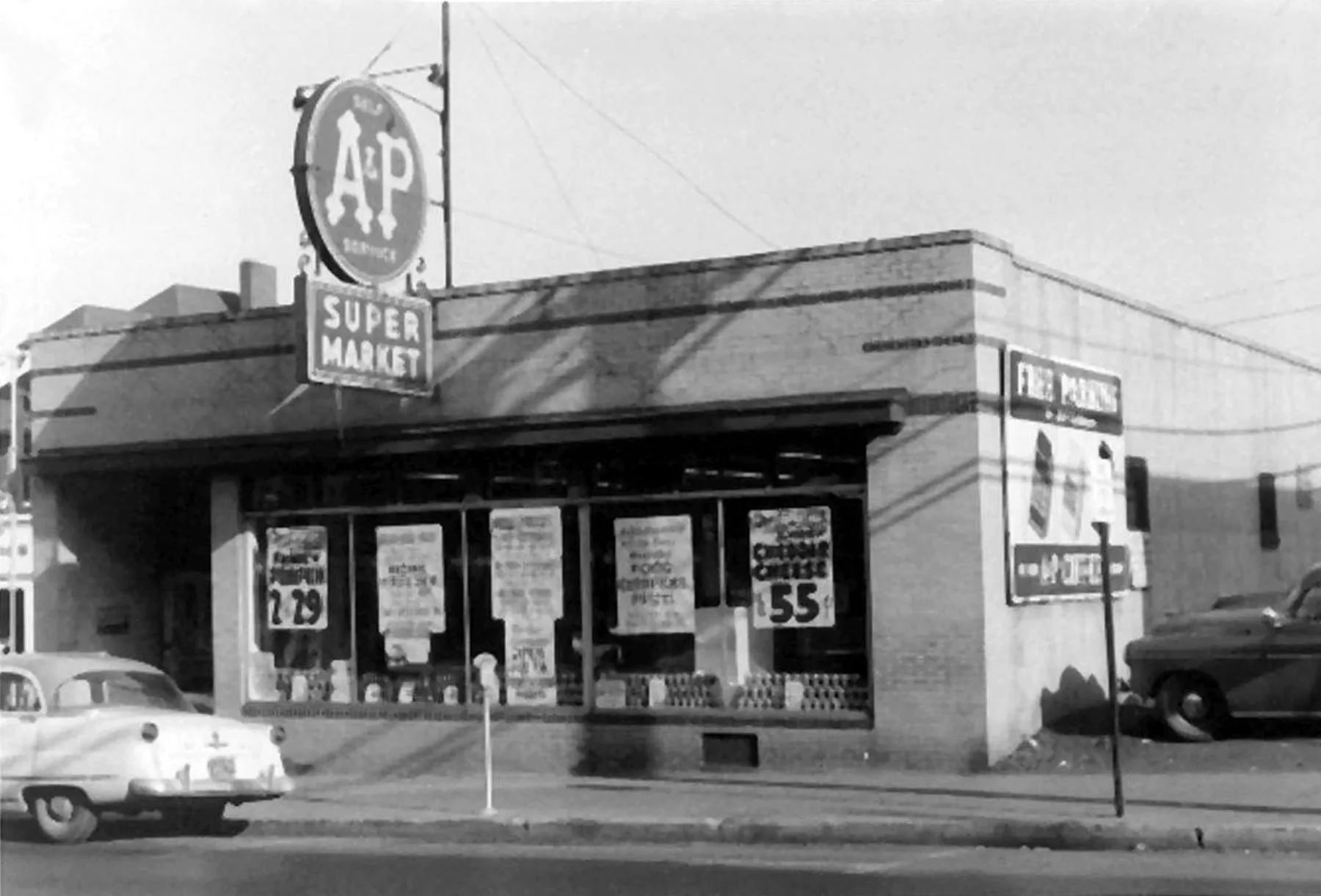
A&P moved from the J.K. Wiley building on Shirley Street to North Jefferson and Small streets. Donaldson also identifies Philip Houck’s shoe store, Puritan Cleaners and John Imperioli’s barbershop in his North Jefferson Street tour.
Bryan D. Donaldson, Brick Town USA, vol. 1 (2006), printed pp. 33–34 (PDF pp. 41–42). About this source.
Hardware and a Ride Home
Goodman’s new store at Shirley and Division streets opened in 1954; Donaldson records its closing in March 1986. Pint & Joe’s Barbershop occupied the rear. Nearby services included Estep’s Taxi, which shared a building with Wharton’s Insurance, and Hershey’s Restaurant, remembered as a Pioneer Trail bus stop.
Bryan D. Donaldson, Brick Town USA, vol. 1 (2006), printed p. 35 (PDF p. 43). About this source.
The Businesses Above the Shops
The block containing Hilly’s, Guido’s, Thelma & Rachel’s dress shop and Hurwitz Clothing also housed the Bell Telephone Exchange, Hower Law Office and C.R. Gracey Insurance upstairs. Donaldson’s account captures a downtown whose working life extended beyond its storefronts.
Bryan D. Donaldson, Brick Town USA, vol. 1 (2006), printed p. 36 (PDF p. 44). About this source.
Help build a fuller downtown history.
Sources
- The Daily News, June 6, 1967, viewer pp. 23–29, 32, 36, 41, 44–45, 49, 51–52, 56–60, 63, 67, 72, 74, 77, 79, 82–83, 87 and 90.
- Mrs. W. O. Fields (Lola Eberman Fields), “Reminiscence of Mount Union,” The Daily News, September 21, 1933, p. 5.