The Thousand Steps were not built as a recreational challenge. Around 1936, Harbison-Walker quarry workers set flat-sided Tuscarora sandstone into the slope of Jacks Mountain to improve their daily climb to Ledge Quarry, roughly 1,000 feet above the Juniata River.
c. 1936
Steps Constructed
1900–1952
Harbison-Walker Quarry Era
1,037
Counted Main Steps
SGL 112
Present-Day Public Land
Why the Mountain Mattered
Geology
Ganister for Silica Brick
Jacks Mountain is capped by the quartz-rich Tuscarora Formation. The stone was quarried as ganister and processed into silica refractory brick capable of withstanding the extreme heat of steel, iron, glass, railroad, and other industrial furnaces.
Transportation
The Dinky System
The steps carried people, not the quarry's rock. Narrow-gauge dinky railroad grades, multiple switchbacks, and six inclined planes moved ganister down the mountainside toward Mount Union's refractory plants. Remnants of that system, including the Dinky House, remain part of the landscape.
What the Oral History Adds
In the locally shared video Thousand Steps Mt. Union, Dan Brown describes making the steps part of his exercise routine while emphasizing what the climb meant for the men who worked above it. His account shifts the focus from the modern hike to the workers who climbed the mountain, labored a full quarry shift, and then descended home. He also identifies the Dinky House as the maintenance building used to repair the small industrial locomotives.
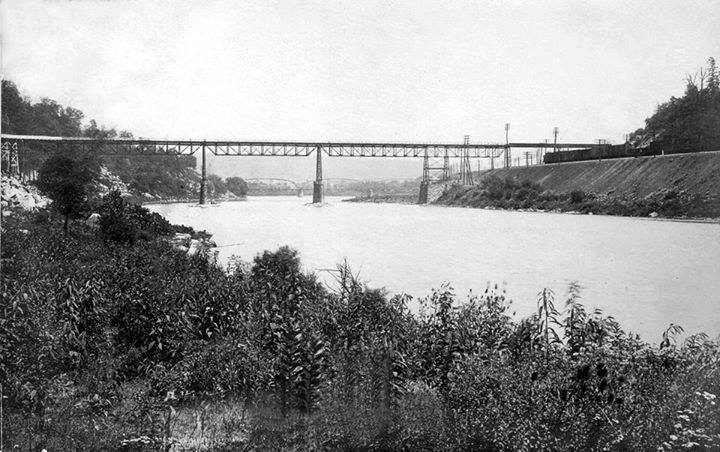
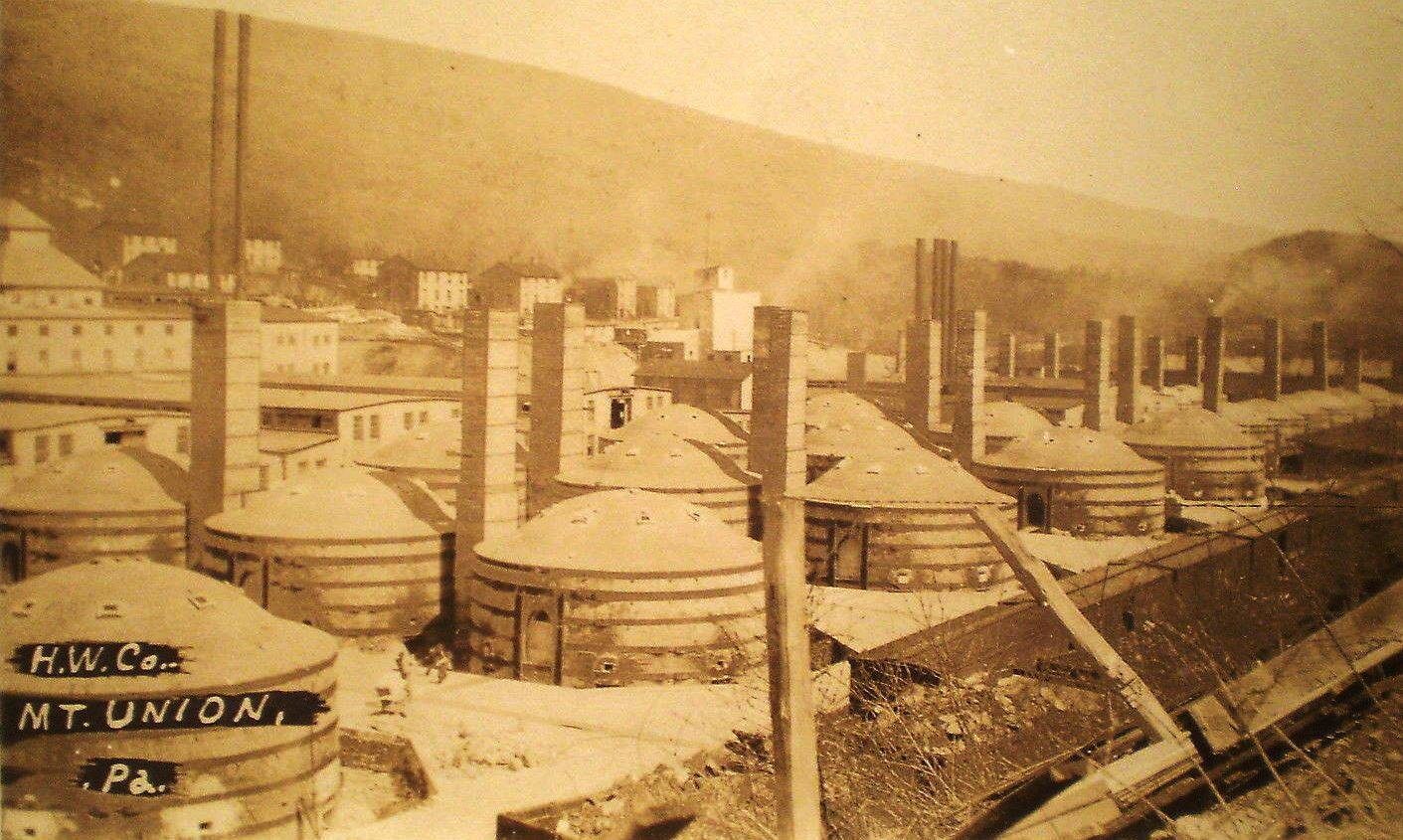
The steps make the most sense as one surviving piece of a much larger system. The 1936 flood damaged industrial and transportation infrastructure throughout the narrows. On the mountain, dinky rail lines and inclined planes connected the quarries to the plants below; in town, thousands of workers transformed ganister into the refractory brick that gave Mount Union its Bricktown identity.
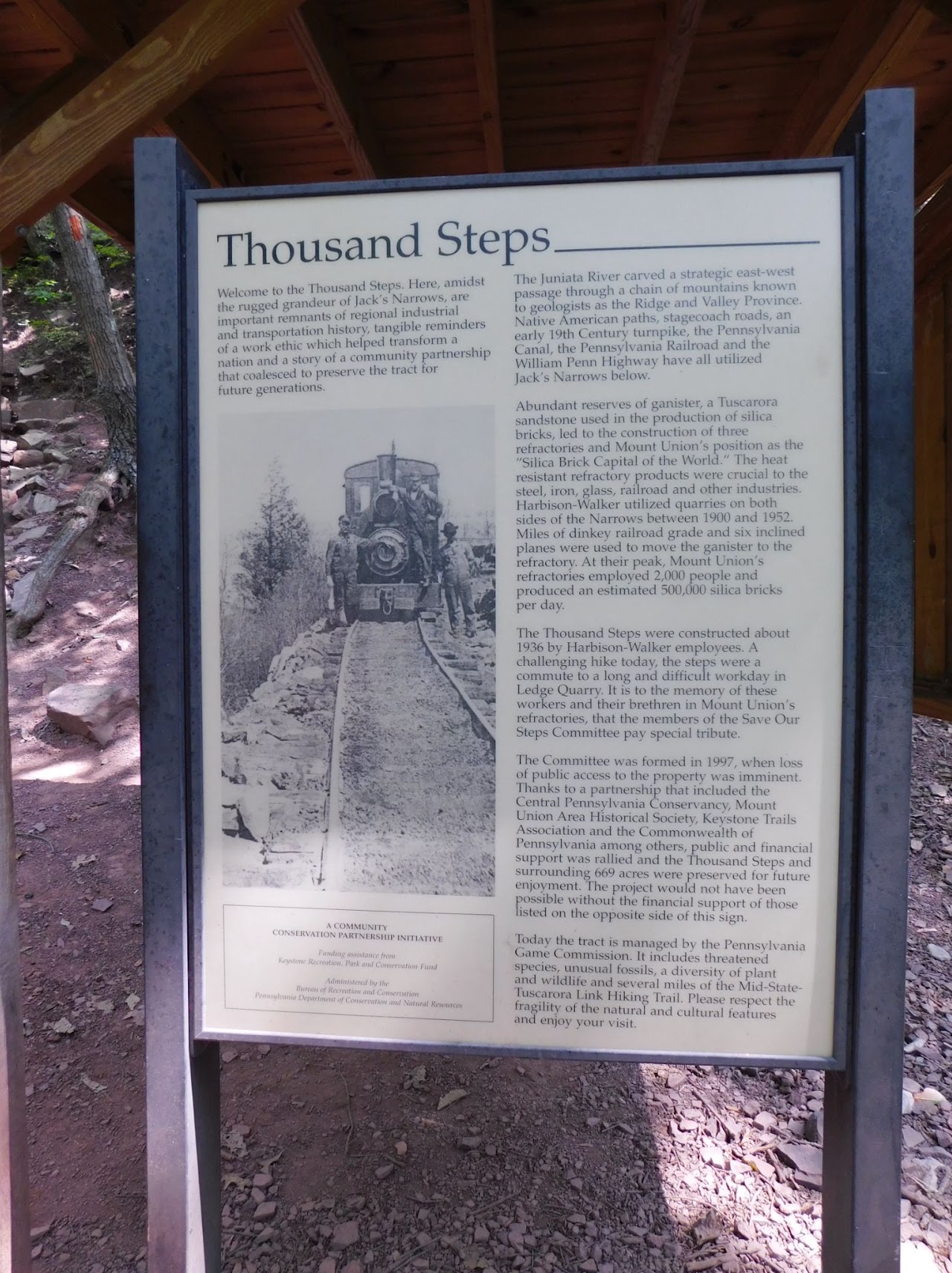
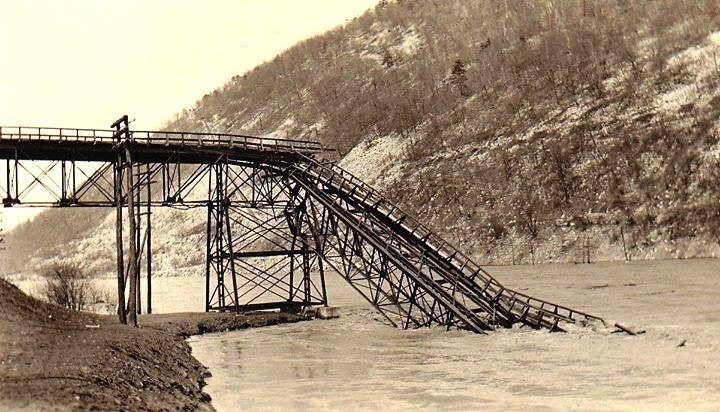
The trailhead interpretive sign connects the steps to Jacks Narrows transportation, quarrying, refractory production, and the community campaign that preserved the site.The dinky bridge in Jacks Narrows before its destructionDinky bridge destruction during the 1936 floodHarbison-Walker workers, 1945The refractory complex below the mountain
Saved by the Community
1990s Preservation
Saving Public Access
When access to the property was threatened in the 1990s, the Save Our Steps Committee brought together conservation groups, historical organizations, trail advocates, government partners, donors, and residents. Their campaign preserved the steps and approximately 669 surrounding acres.
Today
A Memorial You Can Climb
The site is now part of Pennsylvania State Game Lands 112 and the Standing Stone Trail. It remains both a strenuous hiking destination and a physical memorial to the quarry and refractory workers whose labor helped build industrial Mount Union.
Why “A Thousand” Is an Approximation
A 2022 Fewer Footprints trail report counted 1,037 steps between the trail kiosk and the top of the named staircase. The hikers also counted 72 preliminary steps before the kiosk and another 92 on the climb toward Ledge Quarry—1,201 steps on their extended route. Their account describes numbered markers at 100-step intervals, uneven stone risers, breaks along former railroad grades, a short side trail to Mount Union overlooks, and the continuing route to the Dinky House and quarry. These figures are a visitor’s field count rather than an official survey, but they help explain why hikers commonly find more than the landmark’s famous thousand steps.
Visiting responsibly: This is a steep, rocky climb on State Game Lands. Conditions and access guidance can change, and hunting seasons affect the area. Before visiting, consult the Pennsylvania Game Commission and Standing Stone Trail Club, carry water, wear suitable footwear, and leave historic structures and fossils undisturbed.
Explore the Historic Photo Record
The Standing Stone Trail Club maintains an extended pictorial history of the Thousand Steps and the industrial landscape surrounding the trail. Its gallery offers additional visual context for the quarry, railroad grades, workers, and structures that shaped this mountainside.
Dan Brown, interview in Thousand Steps Mt. Union; treated as oral-history context and cross-checked against the institutional sources above.
Community record · September 2026
A place of remembrance
A September 11 climb of remembrance
On September 11, 2026, participants in a memorial climb organized by Dennis Donelson carried the names of first responders killed in the 2001 attacks. The climb began at 8:46 a.m. Mount Union volunteer firefighters Gavin Taylor and Nicholas Stoner ascended in turnout gear. The remembrance concluded with names read aloud and a ceremonial bell supplied by Mapleton Fire Department.
Source: The Daily News, September 12, 2026, pp. 1, 3.