Mount Union’s industrial rise depended on the Pennsylvania Railroad, the East Broad Top Railroad, bridges across the Juniata and sidings that connected factories, quarries and coal fields to national markets.
The centennial edition placed the first Pennsylvania Railroad locomotive through Mount Union on the date seventeen years before borough incorporation. Joseph C. Sechler was identified as the first local railroad agent.
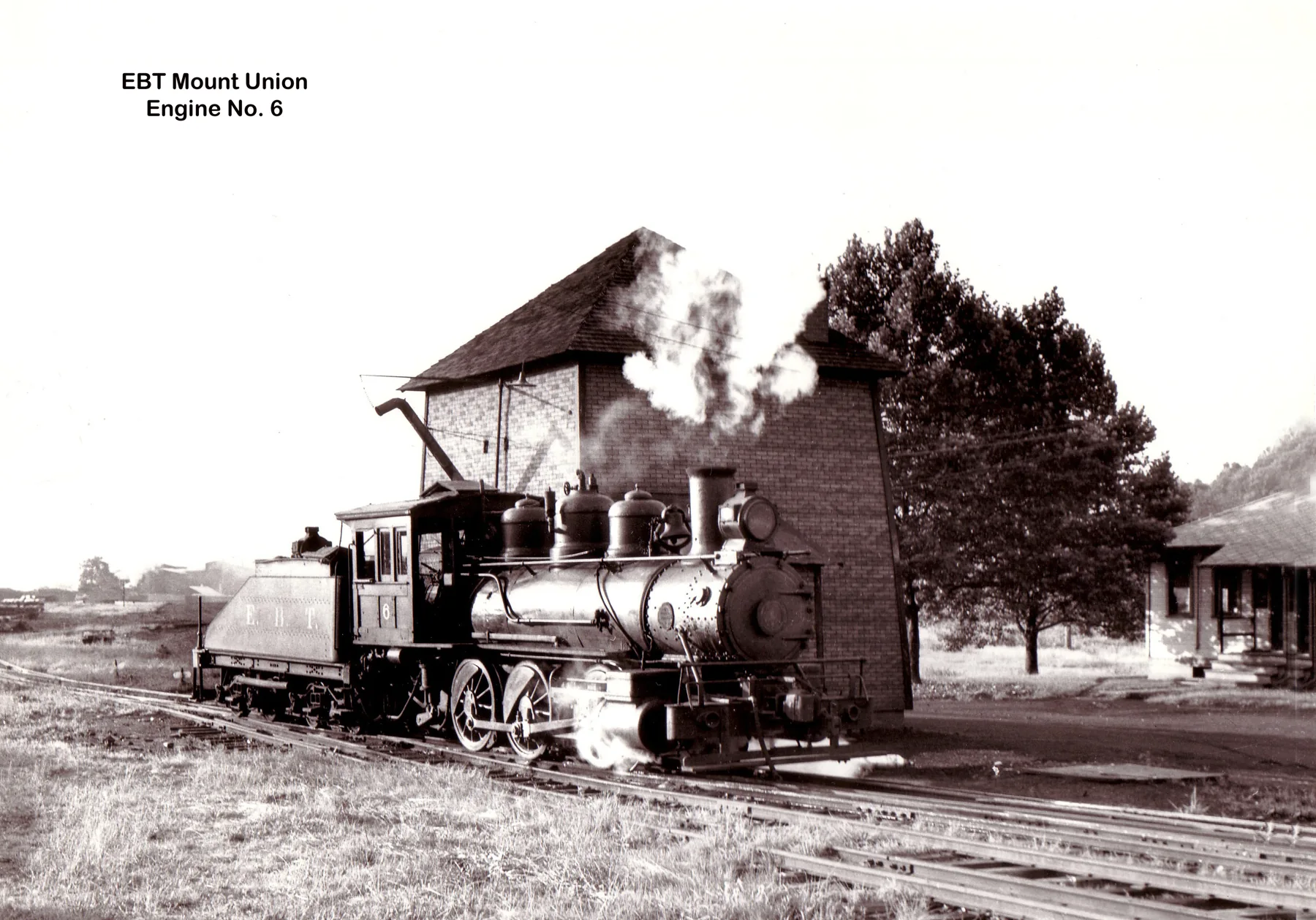
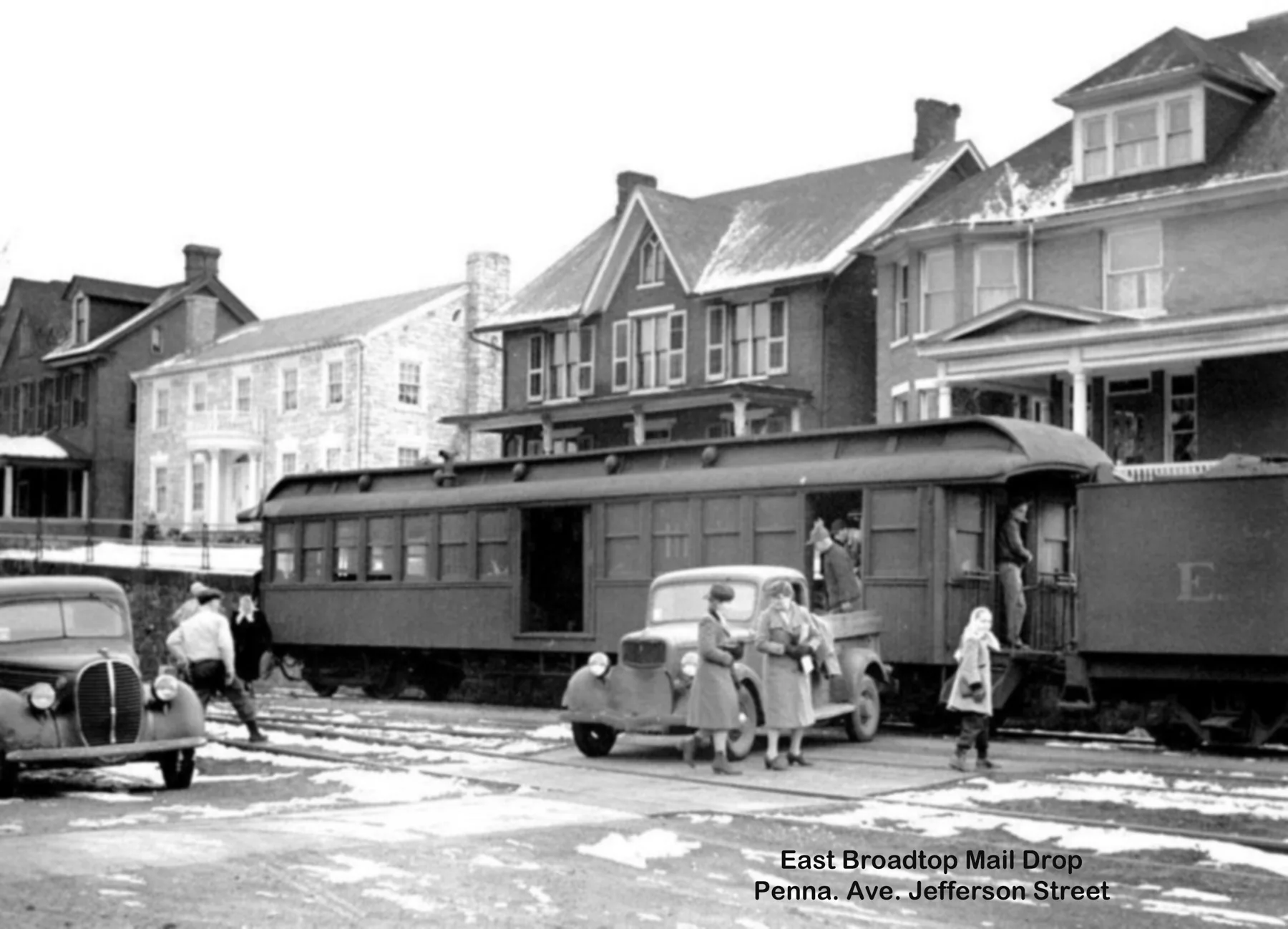
The East Broad Top Railroad was chartered in 1848. Construction began in September 1872, service reached Orbisonia on August 30, 1873, and the line extended to Robertsdale on November 1, 1874.
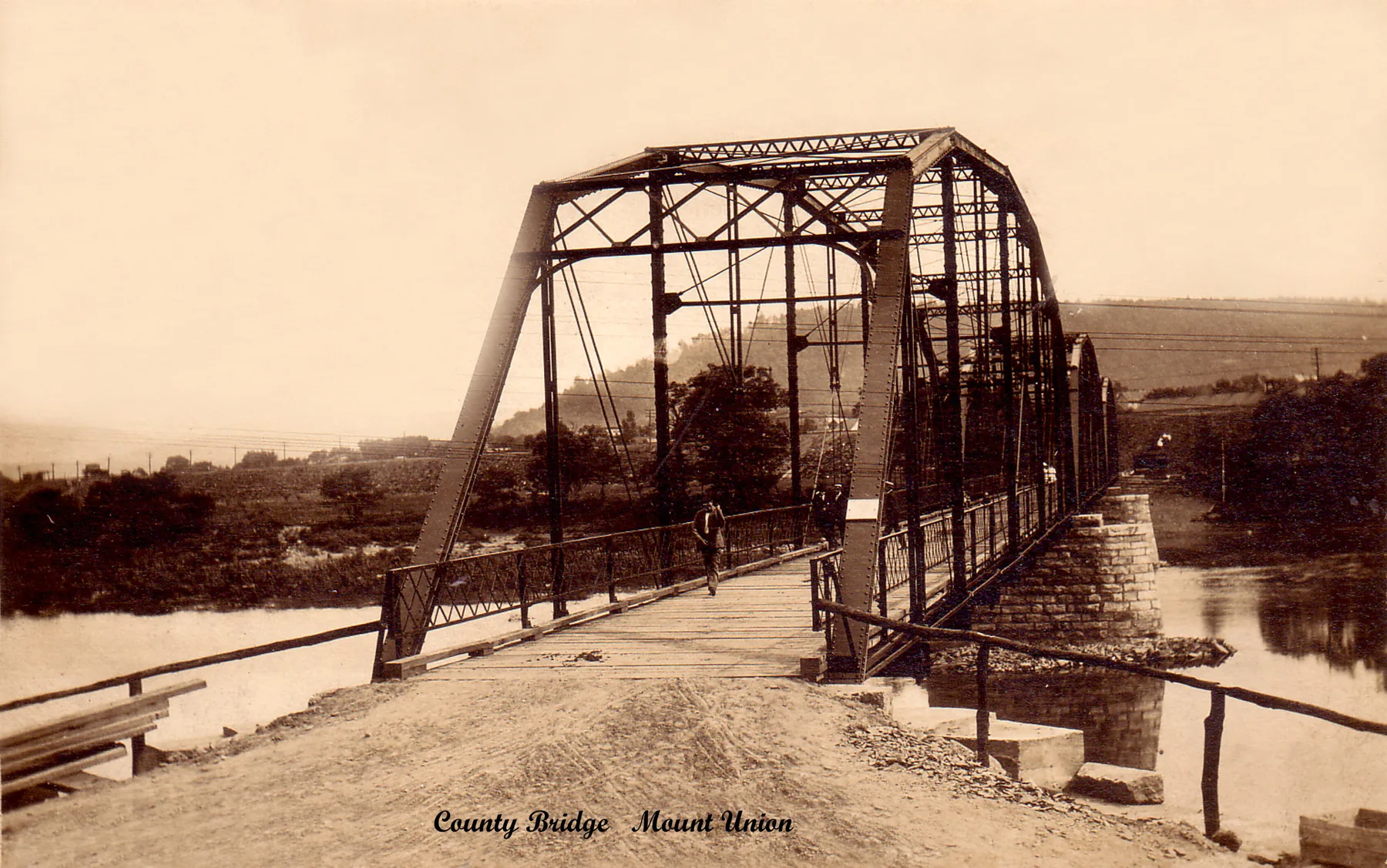
A stone-arch railroad bridge was completed late in the year. The newspaper credited Mount Union resident George Radle as rigger and carpenter foreman and said the project removed two dangerous curves while relocating about 3,000 feet of the Juniata River channel.
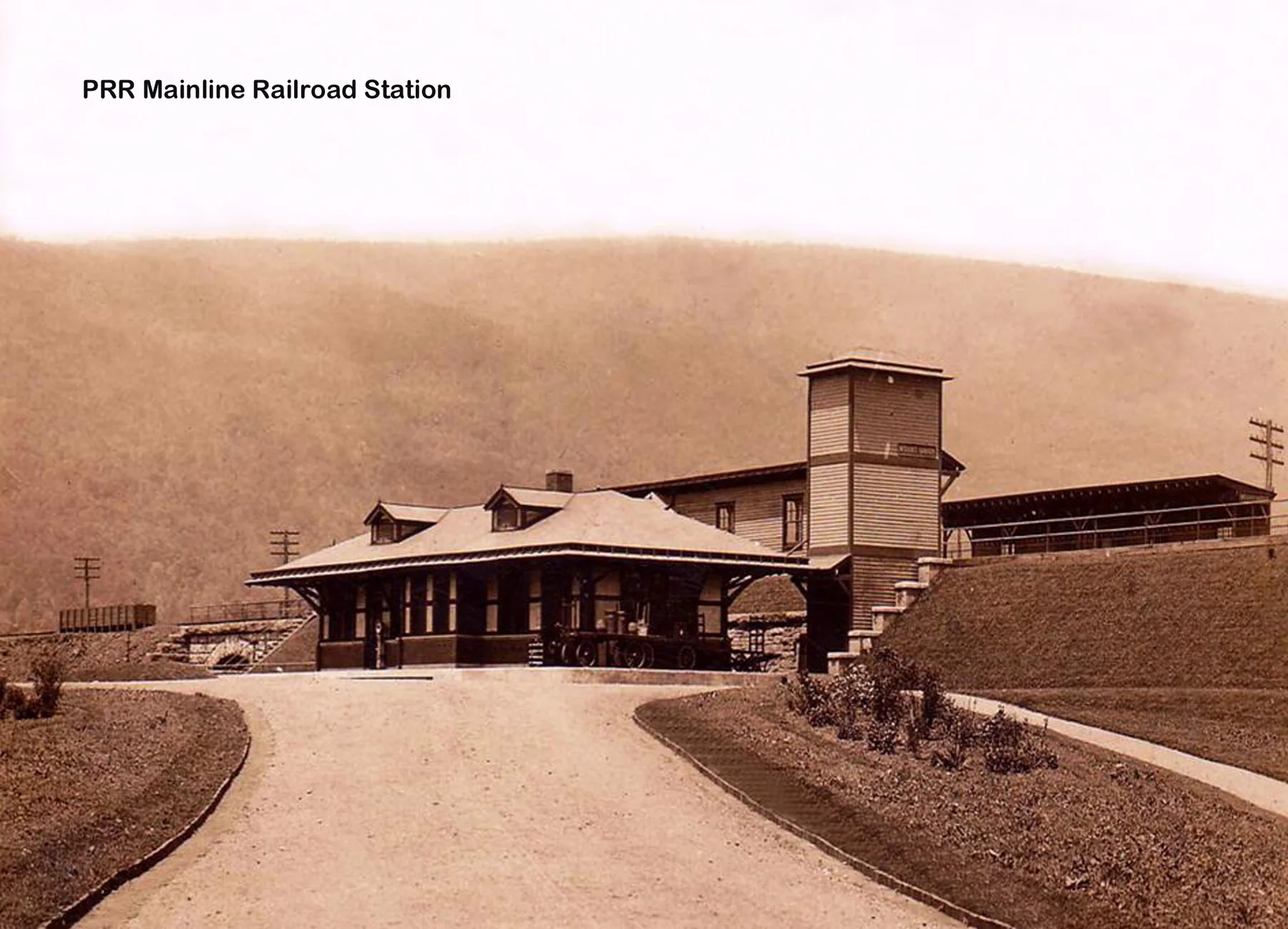
The elevated Pennsylvania Railroad station opened, replacing the earlier station and reshaping passenger movement through town.
The East Broad Top system was described as roughly fifty miles of line, employing about 850 men and carrying approximately 1,400 tons of coal daily. These figures are the 1967 newspaper’s retrospective estimates.
Floodwaters severed rail and road access, damaged the country-club area and swept away the Harbison-Walker dinky bridge across the Juniata. See the complete flood history and photographs.
Preservation Pennsylvania selected the East Broad Top Railroad and EBT Foundation Inc. for its Henry A. Jordon Award, recognizing local preservation of the National Historic Landmark railroad, its rolling stock and its intact shop complex. The honor followed the foundation’s stabilization and restoration program, the 2021 return of passenger service and steam locomotive No. 16’s return to service in 2023 after 67 years.
Narrow-gauge cars, industrial sidings and the PRR yard gave brick plants access to ganister rock, coal and customers. This network helps explain why refractory companies concentrated in and around Mount Union.
Helen T. Bartschat remembered East Broad Top excursion trains carrying local families toward Pogue and Shade Gap for outings. Her recollection records how the railroad served social life as well as industry.
Lola Eberman Fields remembered Rudolph Sechler as the East Broad Top Railroad’s first local agent and yard superintendent. She also recalled the ticket office near Water and Railroad streets and the excitement of picnic trains with distinctive “Dolly Varden” cars. These details are preserved as her attributed community memory.
Fields’s childhood landscape joined the older canal and newer railroad systems: a wooden canal bridge at Water Street, an old aqueduct near the railroad bridge, a deep pool and a shaded spring. Exact present-day placements are not asserted, and active railroad property should never be entered.
The surviving bridge story connects engineering, river alteration and the work of local railroad crews. Historic photographs and later records can help identify what remains and what was replaced.
Grades, bridge abutments, rail alignments and industrial remains still show how transportation shaped the borough. Visit only places open to the public and respect active railroad property.