From the Miller Farm to a Community of Its Own
Allenport began in 1905 when Mount Union businessman and builder Allen S. Welch divided part of the former George P. Miller farm into building lots. The new neighborhood grew beside the state road, the East Broad Top Railroad and the Juniata River during Mount Union’s industrial expansion.
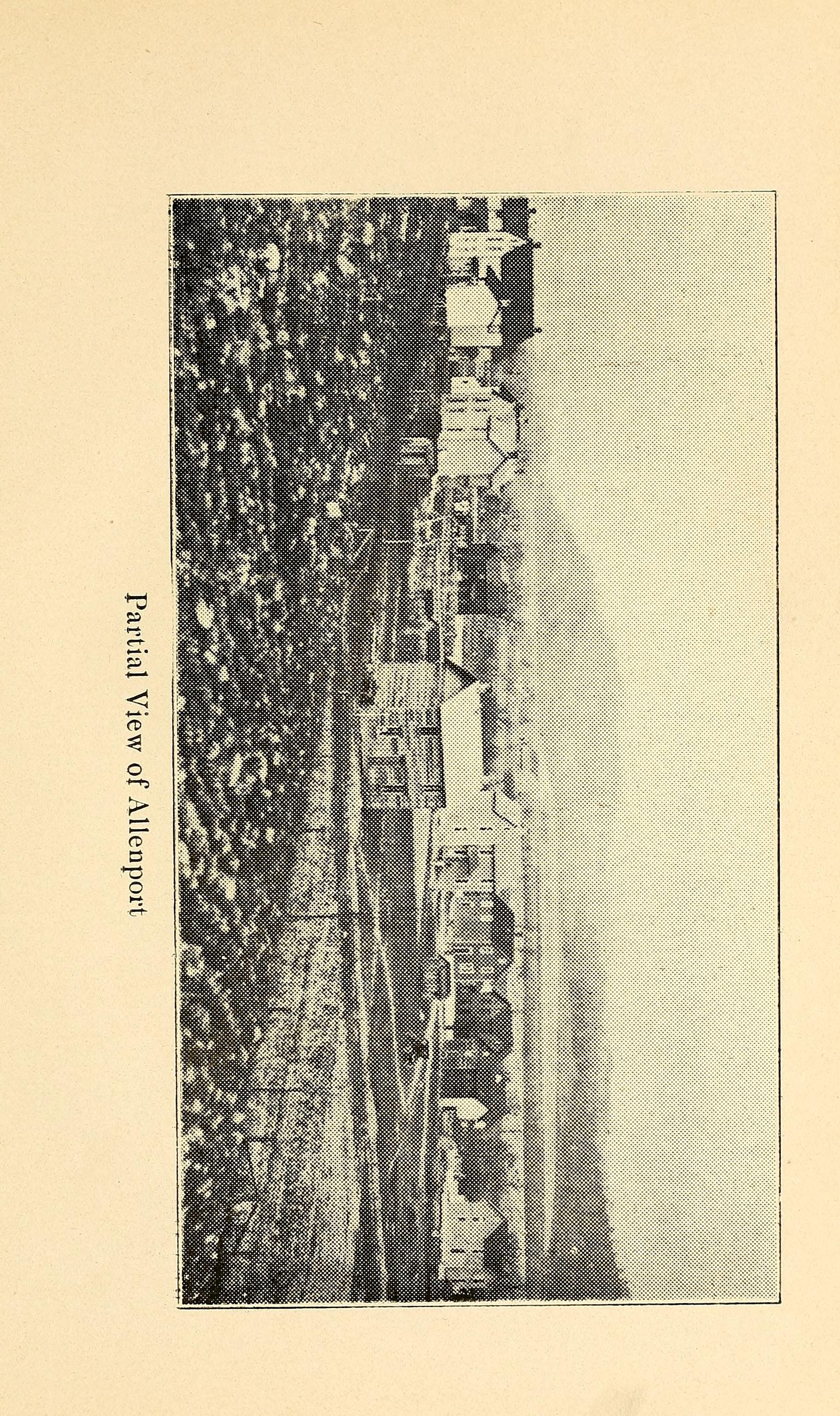
A Rural Landscape Near Mount Union
Farm Country and an Early School
The Allenport name is twentieth-century, but families lived in the vicinity much earlier. Welch recorded a log house near the future village where a school was held in 1838. By the late nineteenth century, the site remained part of the agricultural landscape southeast of Mount Union.
The Land That Became Allenport
Welch identified the core property as the farm of George P. Miller. Allen S. Welch purchased it at public sale on February 11, 1905, then had part of the tract surveyed into building lots.
Allen S. Welch Builds a Suburb
Allen S. Welch named the development Allenport and promoted it as a desirable extension of Mount Union. A contemporary account praised its elevated ground and river view while emphasizing its transportation and public improvements.
Road and Railroad
The state road to Shirleysburg ran through the community, while the East Broad Top Railroad followed a parallel course to the north. Those connections tied Allenport closely to Mount Union’s rail yards and industries.
Water and Sewers
By 1909, Mount Union’s water line had been extended into Allenport and its streets had been sewered—important selling points for a newly planned residential district.
A Welch-Built Neighborhood
The Mount Union Historic District nomination credits Allen S. Welch with building at least fifty houses, primarily in Allenport. Additional lots from the adjoining Lloyd S. Bare property also attracted new homes.
A Snapshot from 1909
Within four years of its founding, Allenport had about twenty-five dwellings, a grocery, a seed store and greenhouse, a schoolhouse and a Methodist church under construction. Charles Howard Welch closed his account with the optimistic declaration that “Allenport has a brilliant future.”
The First Community Institutions
Allenport’s First Store
Welch identified Joseph W. Crawford as one of the first men to settle in Allenport and the first to open a store there. Following Crawford’s death in 1909, his widow and sons continued selling groceries and confectionery goods.
Flowers, Plants and Seeds
Florist C. S. Fouse operated Allenport’s seed store and greenhouse. His work reflected the small-scale businesses that served the growing suburb alongside Mount Union’s larger industrial economy.
The Schoolhouse
A school formed part of Allenport’s earliest civic landscape. Welch’s 1909 account lists a schoolhouse among the community’s principal buildings.
A New Church
A Methodist Sunday school organized in Allenport in 1909 and reportedly enrolled about one hundred people. The congregation laid the cornerstone of its new church on December 5 of that year.
From Oak Extract to Riverview
The Juniata Oak Extract Company operated immediately south of Allenport, adding industrial employment and importance to the new community.
Allenport residents lived near the East Broad Top Railroad and Mount Union’s refractory plants, lumber businesses and rail facilities during the region’s industrial high point.
Construction began on the Industrial Hardwoods plant in 1966. Production started the following year, manufacturing hardwood wheelbarrow handles.
Huntingdon County’s planning timeline records the Riverview Business Center, establishing a new industrial and commercial chapter in the Allenport area.
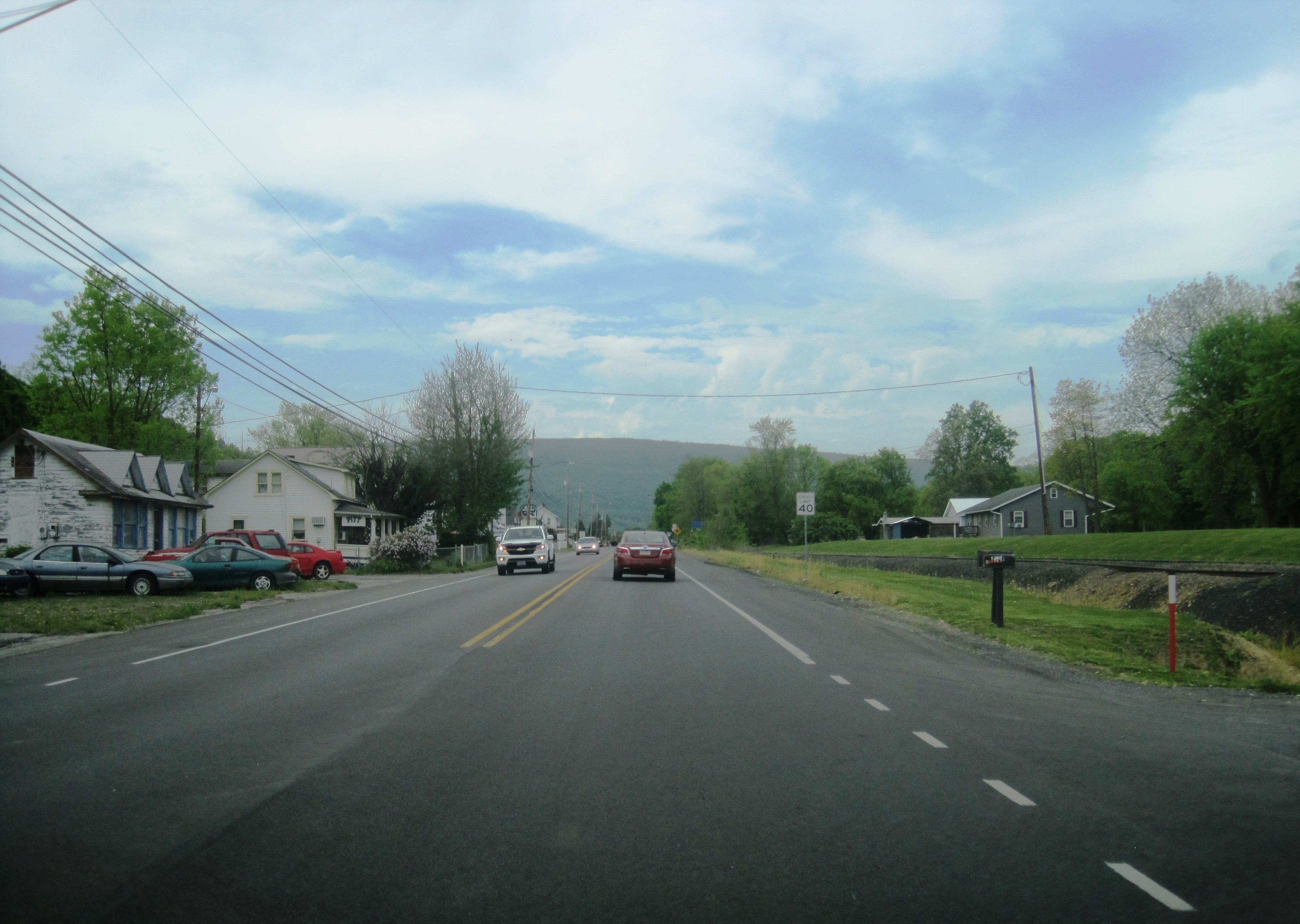
Allenport remains an unincorporated community in Shirley Township. U.S. Route 522, Route 103, the Juniata River and surviving East Broad Top tracks continue to define its landscape.
Continue Exploring
Visit neighboring Newton Hamilton and Kistler, explore the region’s railroad history, or return to the Locations homepage.
The 1998 Rail Revival Proposal
A dated East Broad Top news report described the Mount Union Connecting Railroad’s 1998 effort to restore a rail connection toward Riverview Business Center. The proposal involved former Pennsylvania Railroad and East Broad Top trackage, with work intended to accommodate standard-gauge freight.
Follow-up reports described brush clearing, locomotive repair and track rehabilitation toward the Route 103 crossing. These reports document a revival effort and work in progress. They do not establish that every proposed connection was completed or describe present-day service.
Source: Old Eastie, Mount Union Connecting Railroad reports beginning October 13, 1998.
Sources and Image Credits
- Charles Howard Welch, History of Mount Union, Shirleysburg and Shirley Township (1909–1910), especially printed pp. 550–554.
- Frederick L. Richards, Mount Union Historic District National Register nomination (1994).
- Huntingdon County Planning Commission, 2012 Annual Report and county planning timeline.
- U.S. Census Bureau, 2020 Decennial Census, Allenport census-designated place.
- Partial View of Allenport, in Welch’s history, digitized by the Library of Congress; public domain.
- Mr. Matté, US 522 northbound in Allenport, May 2024, Wikimedia Commons, CC BY-SA 4.0.